







Navratri 2026 Dates: October 11 to October 19
Vijayadashami: October 20
Navratri is one of the most widely celebrated festivals in India. For nine nights, families come together for prayers, community celebrations, Garba, Dandiya, cultural programmes and family gatherings. Gujarat is especially known for its large Garba celebrations, where people gather in open spaces wearing traditional clothes and dance through the evening. Gujarat Tourism describes Garba as a central part of the state's Navratri celebrations, while the Government of India's Incredible India portal highlights the festival's cultural importance across India.
For parents, Navratri also brings a familiar question: What should children wear for Navratri?
The answer depends on where the celebration is taking place and what the child will be doing. A child attending Garba may need clothing that allows plenty of movement. A child going to a family puja may need a simpler traditional outfit. School celebrations can call for something easy to wear and manage independently.
This guide shares 15 Navratri dress ideas for kids, along with practical tips on fabric, fit, colours, footwear and accessories. The suggestions cover girls, boys, babies, toddlers and school-going children so parents can choose an outfit that suits both the occasion and the child.
Quick Answer: What Should Kids Wear for Navratri?
Children can wear traditional Indian clothing such as a chaniya choli, lehenga, kurta, kediyu, dhoti-style outfit or festive dress for Navratri. For Garba and Dandiya, choose clothing that allows the child to walk, dance, sit and move freely.
For girls, chaniya choli, lehenga sets, festive dresses and comfortable co-ord styles are useful choices.
For boys, kediyu, kurta-pajama, dhoti-style sets, printed shirts and festive co-ord sets can work well.
For babies and toddlers, soft and lightweight clothing with easy fastenings is more practical than complicated outfits.
The right Navratri dress for kids should suit the child's age, the local weather, the length of the celebration and the amount of movement involved.
When Is Navratri in 2026?
Sharad Navratri begins on Sunday, October 11, 2026, and the ninth day falls on October 19. Vijayadashami, also known as Dussehra, falls on Tuesday, October 20. These dates are listed in the 2026 Navratri calendar for India.
The Government of India's Incredible India portal also lists its Vibrant Navratri Festival in Ahmedabad from October 11 to October 20, 2026, showing the importance of the festival in Gujarat's cultural calendar.
This gives parents plenty of time to select children's festive clothes, check sizes and make sure the child has tried the outfit before the first celebration.
Why Do Children Dress Traditionally for Navratri?
Navratri has different customs across India. In Gujarat, Garba and Dandiya are closely associated with the festival. Gujarat Tourism explains that people gather in communities for nine nights of Garba, while Dandiya Raas involves participants using small sticks during the dance.
Traditional clothing therefore becomes part of the celebration.
Girls may wear chaniya choli or lehenga-style outfits. Boys may wear kediyu, kurta and dhoti combinations or other regional festive clothing.
Children may also dress traditionally for:
- School Navratri programmes
- Garba classes
- Dandiya events
- Society celebrations
- Family puja
- Cultural competitions
- Family photographs
- Community gatherings
- Navratri parties
The outfit does not have to be elaborate. The most suitable choice depends on what the child will actually do during the event.
15 Navratri Dress Ideas for Kids
1. Chaniya Choli for Girls
A chaniya choli is one of the most recognisable choices for girls attending Garba and Dandiya celebrations.
The traditional combination usually includes a flared skirt, a choli and a dupatta. For children, parents should look for a comfortable waist, a manageable skirt length and a dupatta that does not interfere with movement.
A lighter version is more practical for younger girls who will be dancing or playing.
Best for: Garba, Dandiya, society celebrations and cultural programmes.
2. Lehenga Set for Girls
A children's lehenga set can give a traditional appearance while offering a familiar silhouette.
For younger children, choose a lighter skirt and a comfortable blouse. The waist should allow the child to sit and move without constant adjustment.
A lehenga can also be useful after Navratri for weddings, family functions and other festive occasions.
Best for: Family functions, school celebrations and evening events.
3. Festive Cotton Dress for Girls
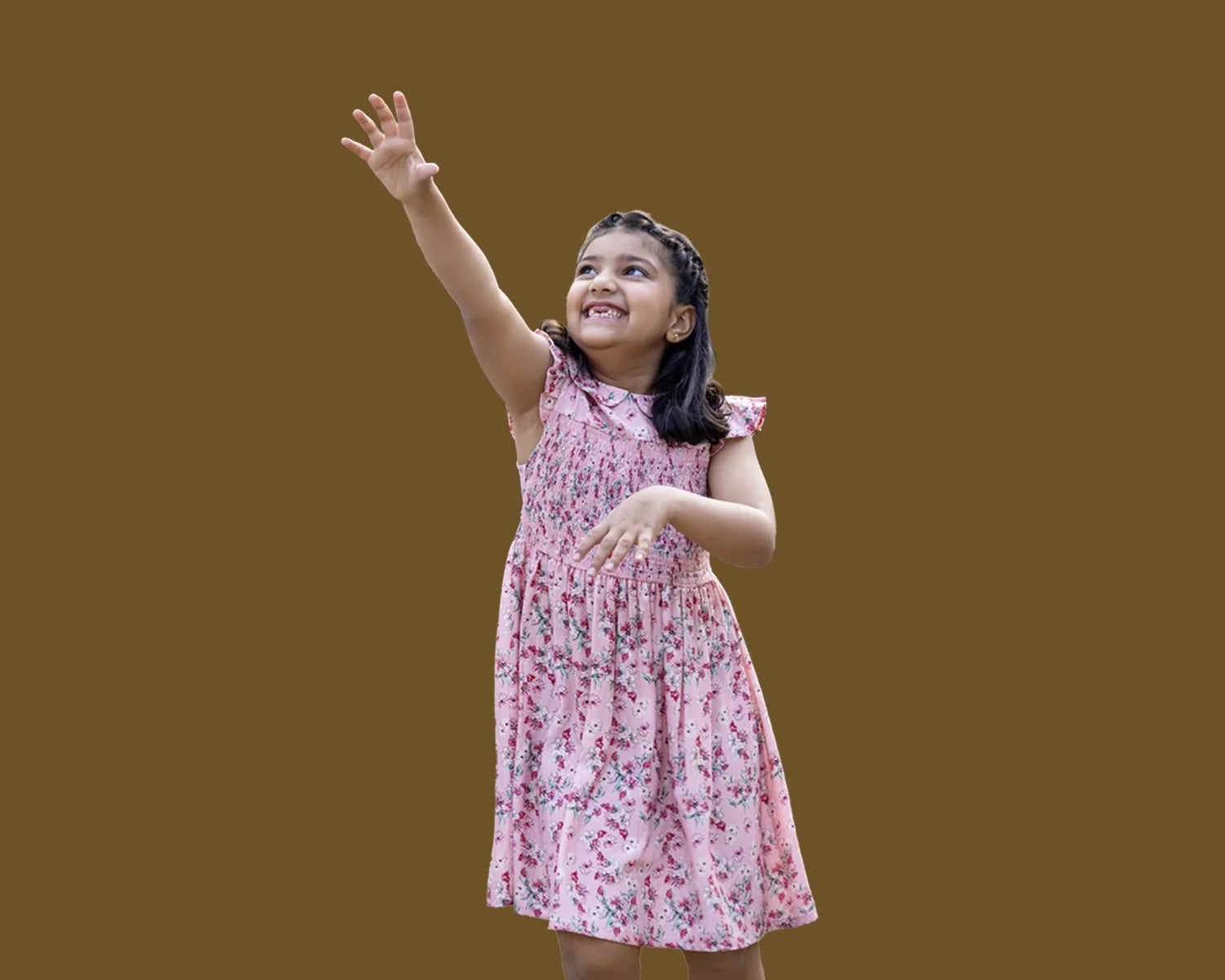
Parents who prefer a simpler outfit can choose a festive cotton dress.
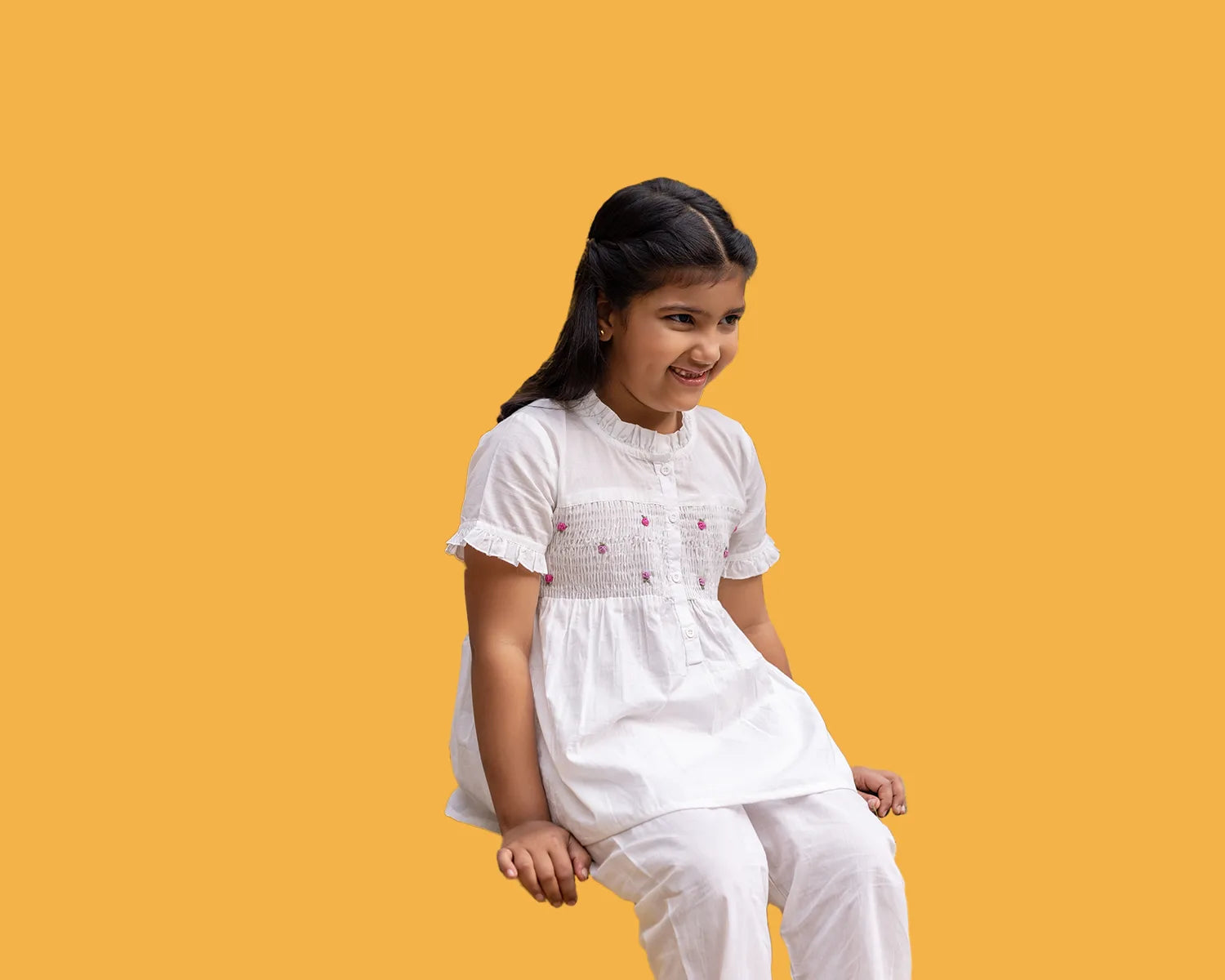
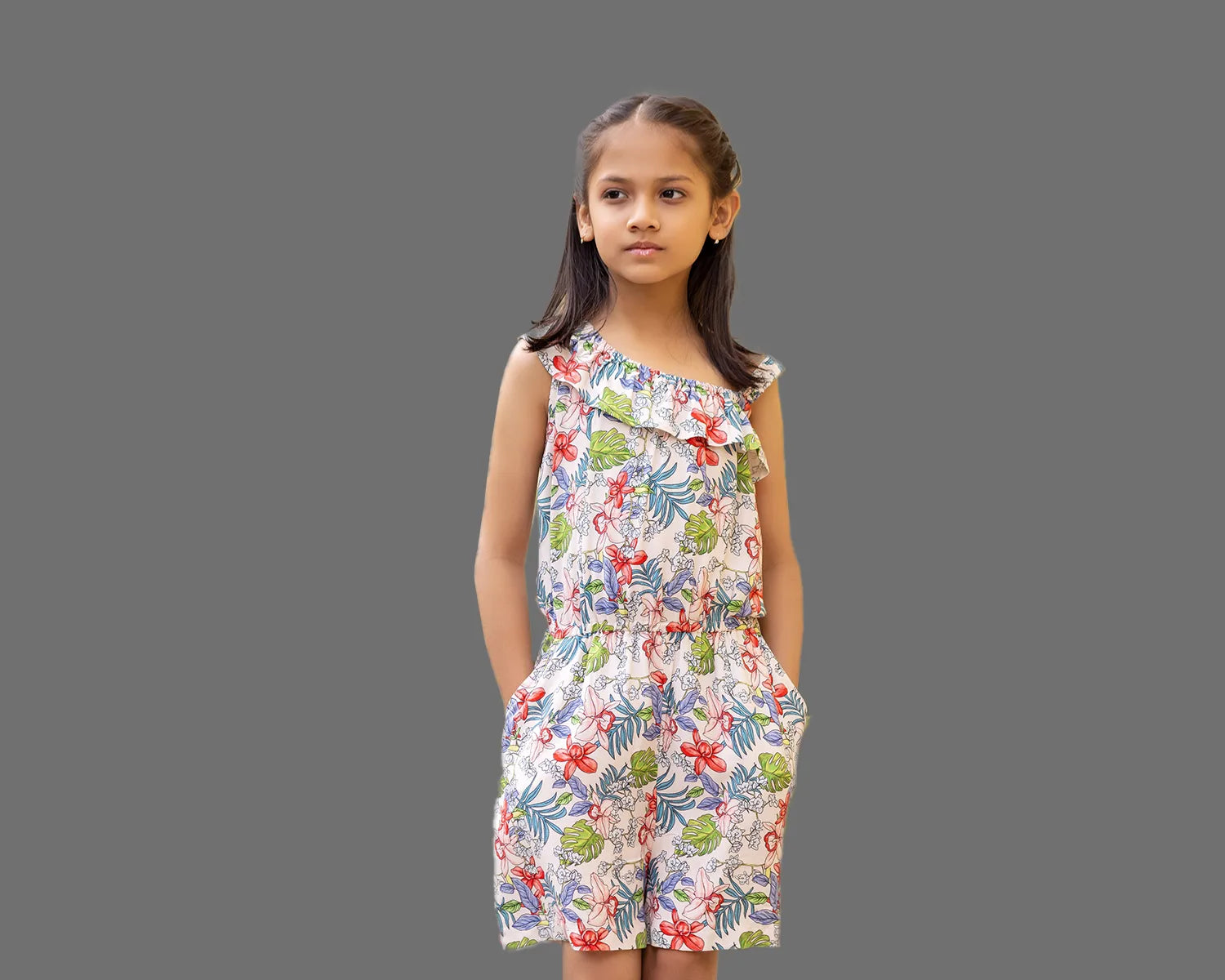
A floral, embroidered or printed cotton dress can work for a home celebration, family visit or school event. The Little Trunk's girls' collection currently includes cotton dresses, embroidered dresses, pinafores and other styles across several children's age groups.
This option is particularly useful when the child is not taking part in Garba but still needs a festive outfit.
Best for: Home puja, family gatherings and daytime celebrations.
4. Embroidered Dress for Girls
A small amount of embroidery can give a regular children's dress a festive appearance.
Parents should check the inside of the garment before buying. Embroidery should not leave rough threads or hard surfaces against the child's skin.
For toddlers, keep the design simple and make sure the embroidery dress allows easy movement.
Best for: Family photographs, puja and school celebrations.
5. Girls' Festive Co-ord Set
A co-ord set gives children a modern option for Navratri.
A coordinated top and bottom can be dressed up with simple accessories while remaining suitable for movement. It can also be worn separately after the festival, which makes it a practical addition to a child's wardrobe.
The Little Trunk currently offers co-ord sets as one of its main children's clothing categories.
Best for: School events, family gatherings and casual festive celebrations.
6. Traditional Kediyu for Boys
For boys attending a Gujarati-style Garba celebration, a kediyu is a natural traditional choice.
The outfit is associated with Gujarati festive dressing and is commonly seen during Garba celebrations. Current children's Garba clothing collections also include kediyu and kedia-style outfits for boys.
Choose a size that gives the child enough room around the shoulders and arms.
Best for: Garba, Dandiya and Gujarati cultural programmes.
7. Kurta and Pajama for Boys
A kurta-pajama combination is suitable when the child is attending a family puja or a traditional celebration without taking part in vigorous dancing.
Choose breathable fabric and comfortable bottoms. For younger children, an elastic waist can make dressing easier.
Best for: Puja, family gatherings and festive dinners.
8. Kurta With Dhoti-Style Bottoms
A kurta with dhoti-style bottoms creates a traditional look while giving younger boys a different option from regular trousers.
Parents should check the length carefully. The bottom should allow the child to walk without stepping on the fabric.
Best for: School cultural programmes, family functions and festive photographs.
9. Printed Shirt and Shorts Set for Boys
Traditional clothing is not the only option for children.
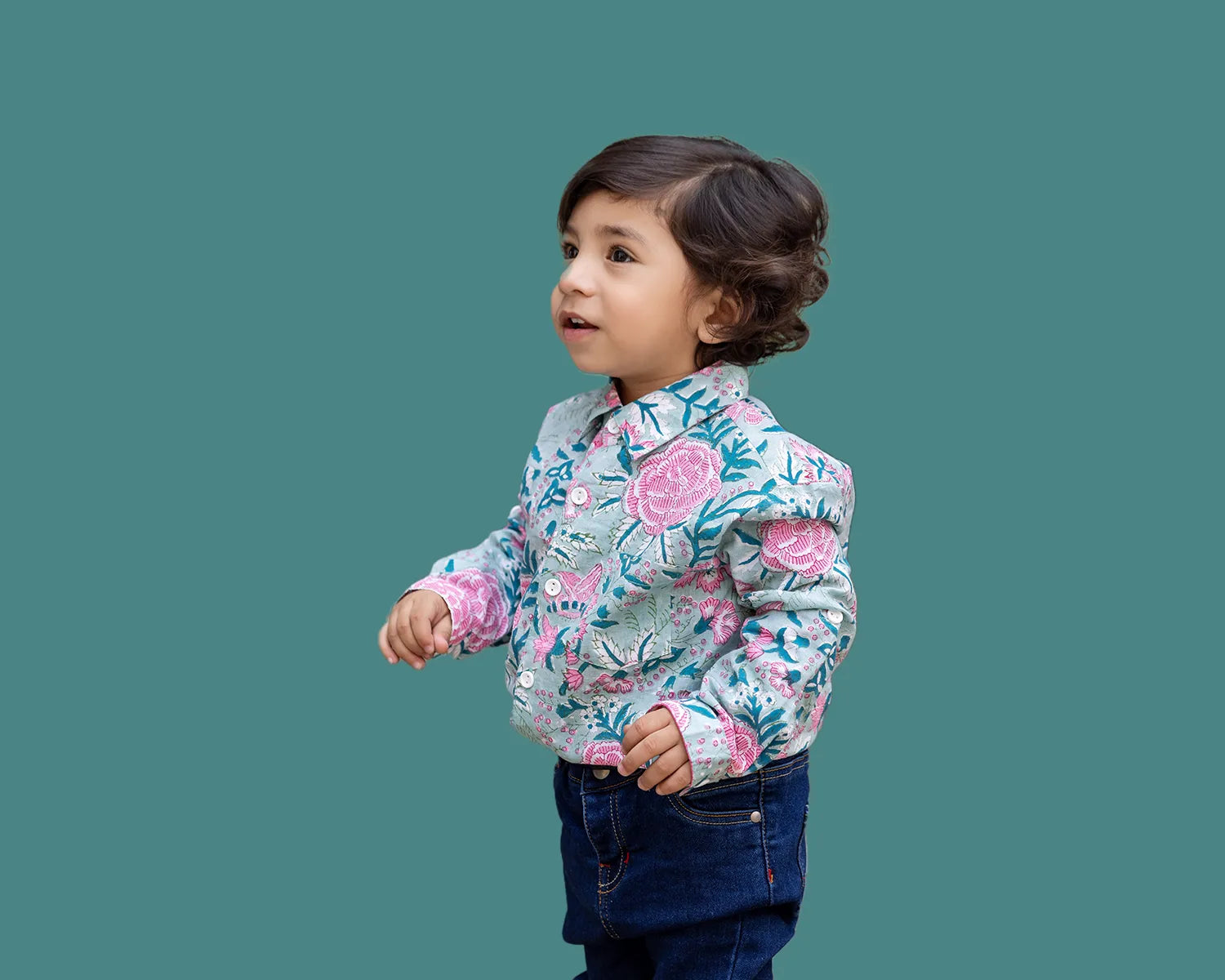
A printed cotton shirt with shorts can work well for a family celebration where the child will spend more time playing than dancing. The Little Trunk's current boys' range includes cotton shirts, shirt-and-shorts sets and co-ord sets.
Choose a festive colour or print to make the outfit suitable for the occasion.
Best for: Daytime gatherings, family visits and casual celebrations.
10. Festive Co-ord Set for Boys
A coordinated shirt and bottom set gives boys a neat festive appearance without requiring multiple layers.
It can also be reused for birthdays, holidays, family dinners and other events.
For active children, check that the waistband, collar and sleeves allow comfortable movement.
Best for: Family events, school celebrations and casual Garba gatherings.
11. Matching Brother-Sister Outfits
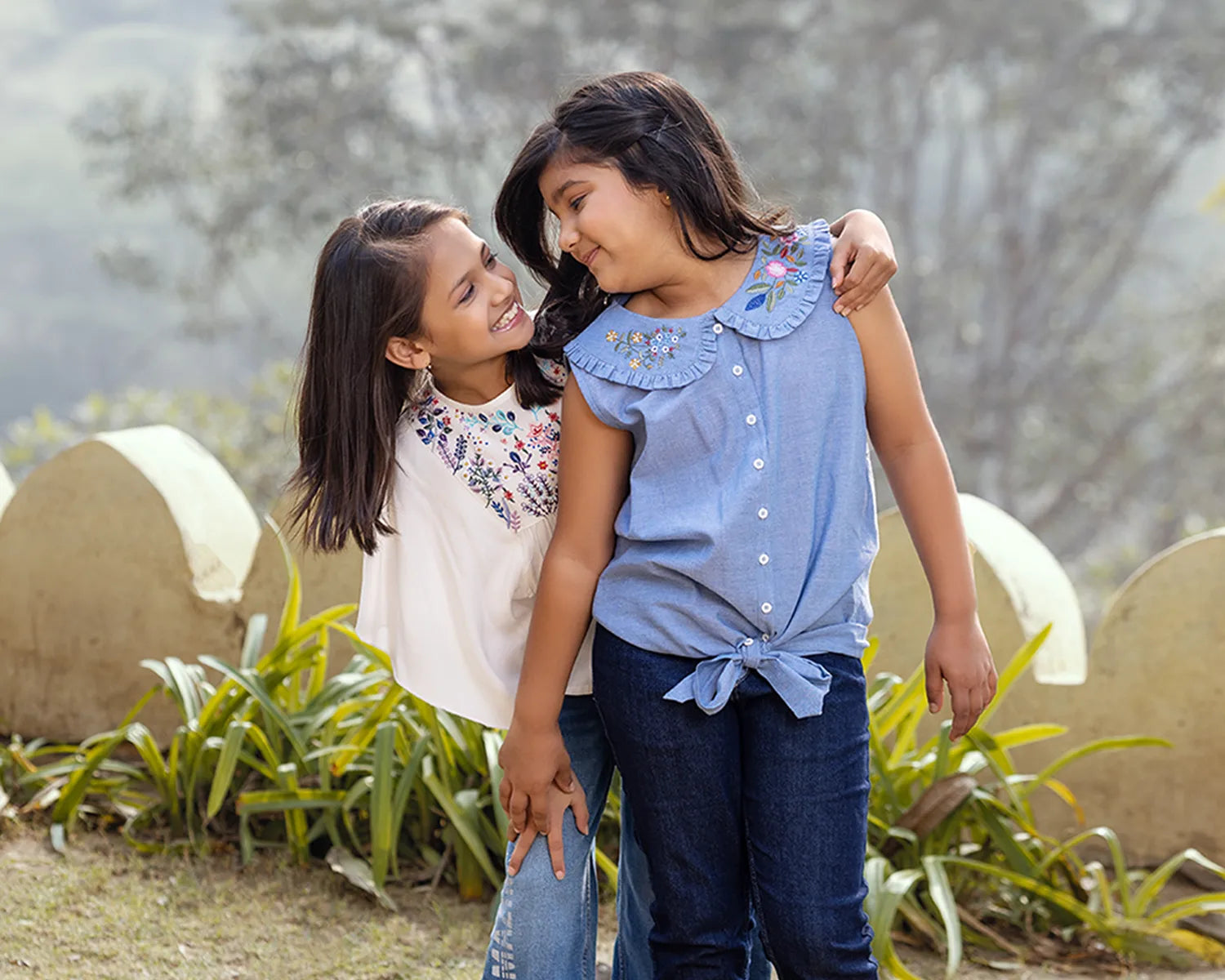
Siblings do not need identical clothes to look coordinated. Parents can select one shared colour for brother sister outfits, similar embroidery or related prints.
For example:
Sister in a yellow or green festive dress
Brother in a cream shirt with a matching colour detail
Or:
Sister in a floral dress
Brother in a coordinating printed shirt
This approach allows each child to wear a style that suits their age.
Best for: Family photographs, society celebrations and festive gatherings.
12. Navratri Dress for Baby Girls
Babies need a different approach to festive dressing.
A baby girl can wear a soft cotton dress with simple embroidery or a festive print. Smocked dresses and easy-opening styles can also be useful because parents may need to change the baby during a long celebration.
Check the:
- Neckline
- Underarm area
- Waist
- Inner seams
- Fastenings
- Embroidery backing
Avoid heavy accessories and loose decorative pieces that a baby could pull or put into her mouth.
Best for: Family puja and short festive visits.
13. Navratri Outfit for Baby Boys
For baby boys, a soft shirt with comfortable bottoms can work well. Parents who prefer a traditional appearance can choose a lightweight kurta-style outfit.
The important points are easy changing, comfortable elastic, soft seams and enough room for movement.
A baby does not need a complicated outfit to look ready for a festival.
Best for: Family gatherings and puja.
14. Toddler-Friendly Festive Outfit
Toddlers have a simple rule for clothing: they need to be able to move.
A toddler may walk, run, sit on the floor, eat, climb stairs and play with other children during a celebration.
For girls, a comfortable dress, skirt-and-top combination or simple festive set can work well.
For boys, a cotton shirt and shorts, co-ord set or lightweight kurta can be practical.
Before the event, let your child wear the outfit at home for a short period. Watch how easily they walk, sit and play.
Best for: Toddlers attending family or society celebrations.
15. Garba and Dandiya Outfit for Kids
Children who will actually participate in Garba or Dandiya need extra attention to movement.
Garba is performed in circular movements, while Dandiya involves coordinated movement with small sticks. Gujarat Tourism describes both as important parts of the state's Navratri celebrations.
For girls, a lighter chaniya choli or flared festive outfit can work well.
For boys, a kediyu or comfortable traditional set is a good option.
Before buying, check:
- Can the child raise both arms?
- Can the child sit comfortably?
- Can the child walk quickly?
- Does the skirt or bottom drag on the floor?
- Does the waistband feel comfortable?
- Can the child use the washroom without major difficulty?
These checks matter more when the child will be dancing for several hours.
What Are the Nine Navratri Colours in 2026?
Many families in Gujarat and Maharashtra follow a colour associated with each day of Navratri. This practice is particularly visible during Garba and Dandiya celebrations.
For 2026, the commonly listed colours are:
|
Navratri Day |
Date |
Colour |
|
Day 1 |
October 11 |
Orange |
|
Day 2 |
October 12 |
White |
|
Day 3 |
October 13 |
Red |
|
Day 4 |
October 14 |
Royal Blue |
|
Day 5 |
October 15 |
Yellow |
|
Day 6 |
October 16 |
Green |
|
Day 7 |
October 17 |
Grey |
|
Day 8 |
October 18 |
Purple |
|
Day 9 |
October 19 |
Peacock Green |
These colours are a cultural practice rather than a universal dress requirement. Families may follow them according to local customs and personal preference. Drik Panchang notes that the daily colour sequence begins with the weekday on which Navratri starts.
For parents, the colour system can also make planning children's outfits easier.
For example, a child can wear:
- Orange on Day 1
- White on Day 2
- Red on Day 3
- Yellow on Day 5
- Green on Day 6
If you are buying only one Navratri outfit, choose a colour that your child can wear for other festive occasions as well.
How to Choose the Right Navratri Dress for Kids
Consider the Weather
October weather varies considerably across India. A family celebrating in Ahmedabad may have different weather conditions from one in Jaipur, Mumbai, Delhi, Bengaluru or Kolkata.
Check the local forecast before choosing layers, sleeves and fabric. For warm conditions, lightweight clothing can make long celebrations more comfortable.
Choose the Correct Size
Avoid buying a festive outfit based only on age. Children of the same age can have different heights and body proportions. Check the brand's size chart and compare it with the child's measurements where possible.
The child should be able to:
- Sit comfortably
- Walk freely
- Raise both arms
- Bend down
- Move the legs without restriction
- Use the washroom easily
Check the Inside of the Garment
Parents inspect the outside of a dress and forget to check the inside.
Look at:
- Seams
- Embroidery backing
- Labels
- Waistbands
- Buttons
- Zips
- Elastic
- Decorative elements
A rough seam can become irritating after several hours.
Think About the Length
Long dresses and skirts can look beautiful in photographs, but the length should suit the child's height and activity.
For children who will dance, play or walk through crowded areas, a manageable length is safer and easier to handle.
Choose Comfortable Footwear
Garba and Dandiya involve movement, so footwear deserves attention.
Choose footwear that:
- Fits properly
- Does not rub the heel
- Allows comfortable walking
- Has a secure fit
- Is easy for the child to manage
For school events, simple and comfortable footwear is usually easier than elaborate footwear.
What Should Kids Wear for Garba and Dandiya?
Garba and Dandiya require more movement than a short family puja.
For girls, parents can consider:
- Chaniya choli
- Lightweight lehenga
- Flared festive skirt and top
- Comfortable festive co-ord set
For boys:
- Kediyu
- Kurta and dhoti-style bottoms
- Kurta-pajama
- Lightweight traditional set
Current children's Garba collections commonly feature chaniya choli for girls and kediyu or kedia-style outfits for boys.
For young children, avoid unnecessary layers and accessories that interfere with movement.
What Accessories Should Children Wear for Navratri?
Accessories can complete a festive outfit, but children do not need many of them.
For girls, simple choices include:
- Hairbands
- Small clips
- Light bangles
- Small earrings where appropriate
- Simple fabric accessories
For boys:
- Comfortable footwear
- Simple stole where suitable
- Small traditional cap or headwear for an event where it will stay secure
For babies and toddlers, keep accessories to a minimum.
Parents should also consider the activity. A child carrying Dandiya sticks, for example, already has something to manage during the dance. Additional loose accessories may become inconvenient.
How to Dress Children for a Navratri School Celebration
School celebrations are different from evening Garba events. Children may need to sit in classrooms, take part in a dance programme, walk on a stage and manage their own clothes.
Choose an outfit that:
- Is easy to wear
- Does not require constant adjustment
- Allows comfortable sitting
- Allows easy movement
- Does not have long trailing fabric
- Is comfortable for several hours
A simple festive dress works well for girls. Boys can wear a kurta, cotton shirt or comfortable festive set. If the school has provided a specific dress code, follow it before choosing an outfit.
Navratri Outfit Ideas by Age
Babies: 0 to 12 Months
Prioritise:
- Soft fabric
- Easy changing
- Comfortable seams
- Light clothing
- Minimal accessories
A simple festive cotton dress or shirt-and-bottom combination can be enough.
Toddlers: 1 to 4 Years
Toddlers need freedom to walk, sit and play.
Choose:
- Easy waistbands
- Comfortable sleeves
- Manageable dress lengths
- Simple fastenings
- Lightweight clothing
Children: 4 to 8 Years
Children in this age group can participate more actively in school and community events.
Good choices include:
- Festive dresses
- Chaniya choli
- Kurta sets
- Cotton shirts
- Co-ord sets
- Garba outfits
Older Children: 8 to 12 Years
Older children can be involved in choosing their own colours and styles.
They may prefer:
- Traditional outfits
- Modern festive clothing
- Garba outfits
- Dandiya outfits
- Coordinated sibling clothing
- Festive dresses and co-ords
Letting children participate in the choice can also help parents avoid buying something the child refuses to wear.
Common Mistakes Parents Should Avoid
Buying the Outfit Without Checking the Size
Festival clothing has different measurements from everyday clothing. Check the size chart before ordering.
Choosing a Dress Only for Photographs
A beautiful photograph lasts, but the child may wear the outfit for several hours. Think about comfort as well.
Ignoring Movement
A child attending Garba needs more freedom of movement than a child attending a short family puja.
Adding Too Many Accessories
Accessories can become uncomfortable, especially for toddlers.
Waiting Until the Last Few Days
Shopping early leaves time for delivery, size checks and exchanges.
Forgetting Footwear
Children may spend hours walking and dancing. Comfortable footwear is part of the outfit.
Navratri Shopping Checklist for Parents
Before placing an order, check:
- Child's current height and measurements
- Brand size chart
- Fabric
- Sleeve length
- Waist comfort
- Dress or trouser length
- Inner seams
- Embroidery finish
- Fastenings
- Footwear
- Accessories
- Delivery time
- Exchange policy
For babies and toddlers, keep one spare outfit ready if the family plans to spend several hours away from home.
Can Navratri Clothes Be Worn After the Festival?
Yes. A useful festive outfit can become part of a child's wider wardrobe.
Girls can reuse festive dresses for:
- Birthday parties
- Family dinners
- Weddings
- School functions
- Religious ceremonies
- Family photographs
Boys can reuse festive shirts, co-ord sets and traditional-inspired outfits for:
- Family gatherings
- Weddings
- Birthday parties
- School programmes
- Religious functions
- Festive dinners
This is one reason to choose a comfortable design that suits more than one occasion.
The Little Trunk's current children's collection includes dresses, boys' shirts, co-ord sets, jumpsuits and skirt or shorts sets, with sizes covering babies through older children.
Shop Comfortable Kidswear for Navratri
Parents looking for a Navratri dress for kids can start with the child's age, activity and the type of celebration.
For girls, The Little Trunk offers dresses across several age groups, including embroidered, floral, checked and printed styles.
For boys, the current collection includes cotton shirts, embroidered shirts, shirt-and-shorts sets and co-ord styles.
This gives parents options for creating a festive wardrobe without limiting every outfit to one festival.
Frequently Asked Questions
What should kids wear for Navratri?
Children can wear traditional outfits such as chaniya choli, lehenga, kediyu, kurta-pajama or dhoti-style sets. Festive cotton dresses, shirts and co-ord sets are also suitable for children attending family or school celebrations.
What is the best Navratri dress for girls?
A chaniya choli or lehenga is suitable for Garba and Dandiya. For simpler celebrations, a festive cotton dress, embroidered dress or comfortable co-ord set can work well.
What should boys wear for Navratri?
Boys can wear a kediyu, kurta-pajama, kurta with dhoti-style bottoms, printed cotton shirt or festive co-ord set. The choice should depend on the type of celebration and the child's comfort.
What should kids wear for Garba?
For Garba, choose clothing that allows free movement. Girls can wear a manageable chaniya choli or lehenga, while boys can wear a kediyu or comfortable traditional outfit.
What should children wear for Dandiya?
Children participating in Dandiya should wear clothes that allow them to move their arms and legs freely. Avoid long, loose or difficult-to-manage clothing.
What are the nine Navratri colours in 2026?
The commonly followed 2026 colours are orange, white, red, royal blue, yellow, green, grey, purple and peacock green from October 11 to October 19. The practice is especially popular in Gujarat and Maharashtra.
Do children have to wear the Navratri colour of the day?
No. Following the daily colour is a family and regional custom. Parents can follow it if it is part of their celebration, while a single versatile festive outfit can also be used throughout Navratri.
Is cotton suitable for Navratri clothes for kids?
Cotton can be a practical choice when the weather is warm because it is breathable and absorbs moisture. The suitability of any fabric also depends on the child's skin, local weather and the garment's construction.
What should babies wear for Navratri?
Babies should wear comfortable, lightweight clothes with soft seams and easy fastenings. Avoid heavy layers and loose accessories.
What should toddlers wear for Navratri?
Toddlers should wear clothes that allow them to walk, sit, play and eat comfortably. Simple dresses, cotton shirts, co-ord sets and lightweight festive outfits are practical options.
Can siblings wear matching Navratri outfits?
Yes. Siblings can coordinate through colours, prints or embroidery rather than wearing identical designs. This gives each child an outfit suited to their age.
When should parents buy Navratri clothes for children?
Buying early gives parents time to check measurements, try the outfit, exchange the size if needed and arrange footwear or accessories before the festival.
Final Thoughts
Choosing a Navratri dress for kids becomes easier when parents start with the child's actual plans for the festival.
A child going to Garba may need a traditional outfit that supports movement. A child attending a family puja may be more comfortable in a festive cotton dress or simple kurta. Babies and toddlers need easy-changing clothes with comfortable seams, while older children can have more say in colours and styles.
For 2026, Sharad Navratri begins on October 11 and continues through October 19, followed by Vijayadashami on October 20.
Whether your child will attend a Garba night, take part in a school programme, visit relatives or simply celebrate at home, choose clothing that fits well, suits the weather and allows the child to enjoy the occasion.
A good festive outfit should make getting ready easier for parents and moving around easier for children. That is a useful standard for any Navratri celebration.

