







Children meet their family’s traditions and culture through small tasks by helping with a rangoli or learning a Garba step. During Navratri, these moments give them a reason to ask why the family celebrates and what its customs mean. A parent’s answer or a grandparent’s story can help a child understand a tradition they have watched for years.
The festival also opens conversations about courage, kindness and standing up for what is right. Stories of Goddess Durga offer a starting point, while making decorations and dancing together give children opportunities to share, listen and take turns. At school, learning how different families celebrate Navratri can encourage curiosity about customs beyond their own home.
These 15 Navratri activities for kids give parents and teachers simple ways to involve children in the celebrations. From paper crafts and clapping games to family stories, each idea leaves room for children to ask questions, make choices and contribute something of their own.
How to explain Navratri to children
Navratri means nine nights. It is a Hindu festival during which devotees honour Goddess Durga and her different forms. Families celebrate in different ways, including prayer, Garba, storytelling and displays of dolls. The Government of India's Navratri guide describes these regional traditions.
For a younger child, begin with what they can see: a decorated doorway, people dancing together or dolls arranged for visitors. Ask what they notice before introducing a longer story.
There is a sound reason to include varied activities. NCERT's National Curriculum Framework for the Foundational Stage places play at the centre of early learning and includes art, craft, music, movement and stories. The ideas below give children opportunities to count, listen, make patterns and talk about what they create.
The ages and timings are suggested starting points. Adjust them to the child and supervise craft work. For younger children, prepare large paper pieces and use age-appropriate crayons and glue. Adults should handle sharp cutting tools and hang finished decorations.
15 Navratri activities for school and home
1. Make a paper rangoli
Suggested age: 3 years and above. Time: 15 minutes.
You will need: Coloured paper, a large sheet, crayons and a glue stick.
-
Cut large circles, triangles and petal shapes before the activity.
-
Draw one circle in the middle of the sheet. Ask the child to arrange shapes around it.
-
Let them move the pieces before they glue down their chosen pattern.
For a class, give each group one sheet and ask children to take turns adding shapes. At home, make a small design for a table. This paper rangoli activity gives children practice with shapes and repeating patterns, with no loose powder to clear from the floor.
2. Organise a Navratri colour hunt
Suggested age: 3 years and above. Time: 10 minutes.
You will need: Colour cards and everyday objects already in the room.
-
Show one card, such as red, yellow or green.
-
Ask children to point to something in that colour, including a book, cushion or garment.
-
Invite older children to find two shades of the same colour and describe the difference.
Use pointing in a classroom so children can leave objects where they belong. If your school follows a daily colour theme, check its notice first. Our Navratri colours guide for kids can help parents plan clothes around the colour schedule.
3. Decorate paper dandiya sticks
Suggested age: 4 years and above. Time: 15 to 20 minutes.
You will need: Short paper tubes, coloured tape and crayons.
-
Prepare two light paper tubes for each child and secure their edges.
-
Add stripes, dots or zigzags with crayons and small pieces of tape.
-
Ask the child to repeat one pattern on both tubes and write their name near the ends.
This dandiya craft for kids works as a table activity at home or a school craft station. Use the finished tubes as display props. For dance practice, begin with empty hands and introduce suitable equipment only with the teacher's guidance.
4. Try a simple Garba circle
Suggested age: 4 years and above. Time: 10 minutes.
You will need: Clear floor space and a short Garba music track.
UNESCO describes Garba as a devotional dance associated with Navratri. It added Garba of Gujarat to its Representative List of the Intangible Cultural Heritage of Humanity in 2023.
-
Stand in a loose circle with room between children.
-
Practise a slow step and clap together, then follow a short sequence from a teacher or family member who knows Garba.
-
Play the music quietly enough for everyone to hear the instructions.
Offer seated clapping to children who prefer it. Keep this first Garba activity for kids short, with time to pause and try again.
5. Play a clap-and-repeat rhythm game
Suggested age: 3 years and above. Time: 10 minutes.
You will need: Hands and a comfortable place to sit.
-
Clap twice and ask the children to copy you.
-
Try a short pattern, such as clap, pause, clap, clap.
-
Invite each child to lead one round, or let them pass if they prefer to listen.
At home, a child and an adult can take turns. In school, use this as a seated activity between two craft sessions. Children practise listening for a sequence and waiting for their turn. Begin without background music so the pattern stays clear.
6. Tell a Navratri story with pictures
Suggested age: 5 years and above. Time: 15 minutes.
You will need: A suitable picture book or three simple drawings.
The story of Goddess Durga overcoming Mahishasura is one of the traditions associated with Navratri. Incredible India explains this connection as part of the festival's theme of good overcoming evil.
-
Choose a short retelling that suits the children's age.
-
Use three pictures to show the beginning, middle and end.
-
Ask children to put the pictures in order and retell one part in their own words.
Keep difficult or frightening details brief. In a classroom, explain that families may tell the story differently and invite children to ask questions.
7. Make a nine-night counting board
Suggested age: 3 years and above. Time: 10 to 15 minutes.
You will need: Paper, crayons and nine large paper circles.
-
Draw nine spaces and number them from one to nine.
-
Help the child place one paper circle in each space while counting aloud.
-
For older children, cover a number and ask which one is missing.
This is a simple Navratri activity for preschoolers who enjoy matching and counting. Use fewer spaces if nine feels like too much at first. Explain that the board refers to the festival's nine nights. Follow your family's calendar separately for the dates of rituals.
8. Create a paper toran
Suggested age: 4 years and above. Time: 20 minutes.
You will need: A wide paper strip, paper leaf shapes, crayons and glue.
-
Ask each child to decorate two or three paper leaves.
-
Arrange the leaves along the strip, trying a repeated colour pattern.
-
Glue them in place and leave the toran flat until it dries.
For Navratri decoration ideas for school, join several short sections along a display board. At home, an adult can place the finished strip above a doorway. Write the makers' names on the back so children can find their own work later.
9. Make a paper diya greeting card
Suggested age: 4 years and above. Time: 15 minutes.
You will need: Folded card, paper shapes, crayons and glue.
-
Draw or cut a bowl shape for the diya and a large flame shape.
-
Let the child arrange and glue both pieces on the front of the card.
-
Add a Navratri greeting inside. Younger children can dictate their message to an adult.
Keep the lamp entirely on paper. Children can give the card to a relative, teacher or neighbour. In a classroom, display the cards together and let each child explain one colour or detail they chose.
10. Arrange a small Golu-inspired display
Suggested age: 5 years and above. Time: 20 minutes.
You will need: A stable low surface, large toys or dolls, and paper labels.
Tamil Nadu Tourism describes Golu as a Navratri display of dolls and figurines on stepped platforms. Displays can include gods, goddesses and scenes from stories.
-
Look at a photograph of a traditional Golu together.
-
Help the child arrange a few large figures on a stable surface.
-
Invite them to tell a short story about the scene and make a label for it.
Describe this as a classroom or home display inspired by Golu. If your family keeps a traditional Golu, let an adult explain its customs and decide where children can help.
11. Make a festival map of India
Suggested age: 6 years and above. Time: 20 minutes.
You will need: A printed outline map of India, pencils and three picture cards.
-
Find Gujarat and add a Garba picture.
-
Find West Bengal and add a Durga Puja picture.
-
Find Tamil Nadu and add a Golu picture.
Use the tourism guides above to check the labels. UNESCO's account of Durga Puja in Kolkata also describes its clay images, pandals and craft traditions.
Explain that people celebrate these traditions beyond the places marked on the map. At school, children can work in pairs. At home, add a note about where your own family celebrates.
12. Start a nine-day kindness chart
Suggested age: 5 years and above. Time: 5 minutes each day.
You will need: One sheet of paper and a pencil.
-
Draw nine boxes and ask the child to suggest small, helpful actions.
-
Choose one action, such as sharing crayons, putting away books or thanking someone who helped.
-
At the end of the day, let the child draw or write what happened.
This is an optional family activity that fits the festival period. It is not a religious requirement. Keep the chart private or use it for a quiet conversation. At school, invite children to notice helpful actions without ranking them against one another.
13. Let children plan a festive outfit
Suggested age: 4 years and above. Time: 15 minutes.
You will need: Two or three suitable garments from the child's wardrobe.
-
Explain the event and any school dress rule.
-
Ask the child to choose a combination and say why the colours work together.
-
Try the clothes on, then practise sitting, bending and raising both arms.
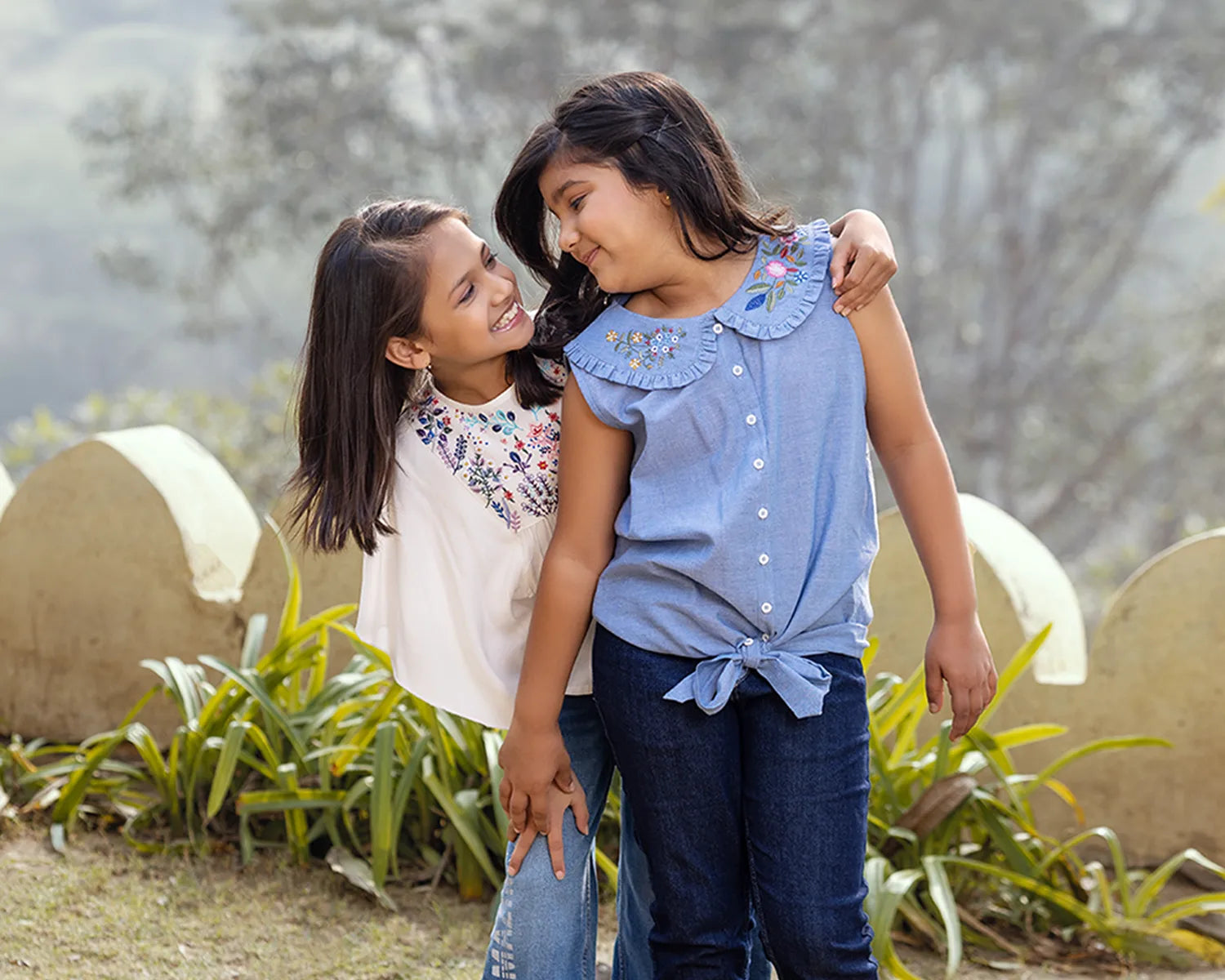
This makes choosing a Navratri dress for kids a shared task. At school, children can draw their ideas on paper instead of bringing clothes. Siblings can choose one shared colour using ideas from our brother-sister matching outfit guide, which also suit other family celebrations.
14. Interview a family member about Navratri
Suggested age: 6 years and above. Time: 15 minutes.
You will need: Paper, a pencil and someone willing to share a memory.
Help the child ask three questions:
-
How did you celebrate Navratri when you were my age?
-
Which song, food or activity do you remember?
-
What would you like to show me this year?
The child can write a few lines or draw what they hear. For a school task, allow children to speak with any familiar adult or use a teacher's example. Each account represents that person's experience, so different answers can sit beside one another.
15. Put together a Navratri scrapbook
Suggested age: 4 years and above. Time: 15 to 20 minutes per session.
You will need: Folded sheets, crayons, saved paper crafts and glue.
-
Give each page one subject, such as a dance, a family visit or a favourite decoration.
-
Add a drawing, a small craft or a photograph you already have.
-
Ask the child to finish a sentence such as “Today I noticed” or “I would like to try”.
At school, each child can contribute one page to a class book. At home, leave some pages open for their own ideas. UNICEF's guidance on free play encourages adults to support children's interests while allowing them to make choices.
How to plan a Navratri celebration in school
Choose a few activities that fit your room and the number of adults available. Here is one suggested 45-minute plan for a small group:
|
Time |
Activity |
|
First 5 minutes |
Introduce Navratri with one picture and a short explanation. |
|
Next 15 minutes |
Make paper rangoli or decorate paper dandiya props. |
|
Next 5 minutes |
Clear the materials and take a water break. |
|
Next 10 minutes |
Try a Garba circle or a seated rhythm game. |
|
Final 10 minutes |
Let children share their work and help tidy the room. |
Prepare materials before children arrive. Offer a quiet table activity alongside music, and let children join through drawing, listening or seated movement. Explain customs respectfully and keep participation in worship optional.
For Navratri activities at home, start with one idea your child chooses. Keep the materials if they want to return to it the next day.
What should kids wear for Navratri activities?
Choose children's festive clothes around the day's plans. A school craft morning, a family puja and a Garba performance may each need a different outfit.
For crafts and school celebrations
Use washable clothes that fit comfortably when the child sits on the floor. Add an apron for glue or paint. Check the care label before deciding whether a garment suits a messy activity.
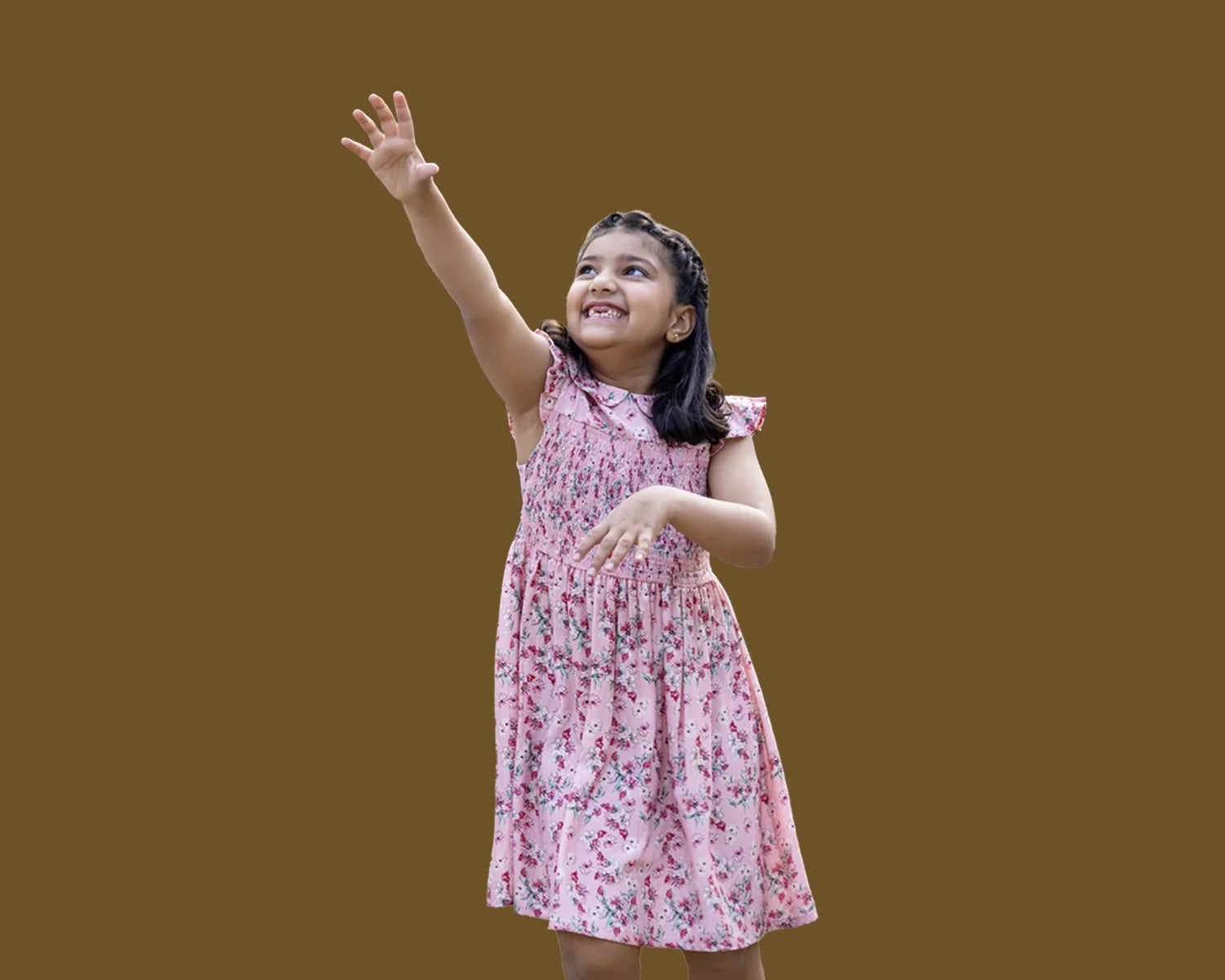
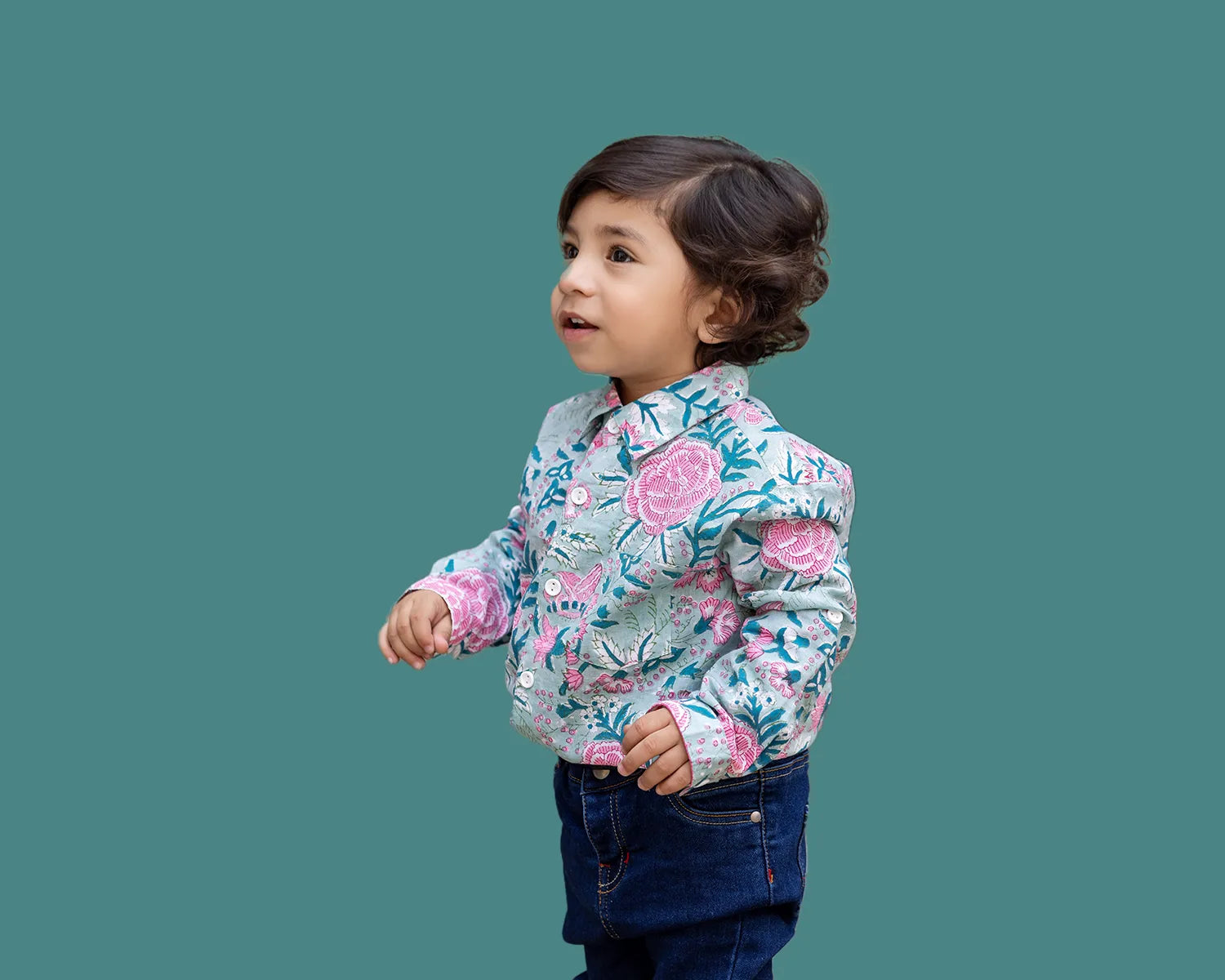
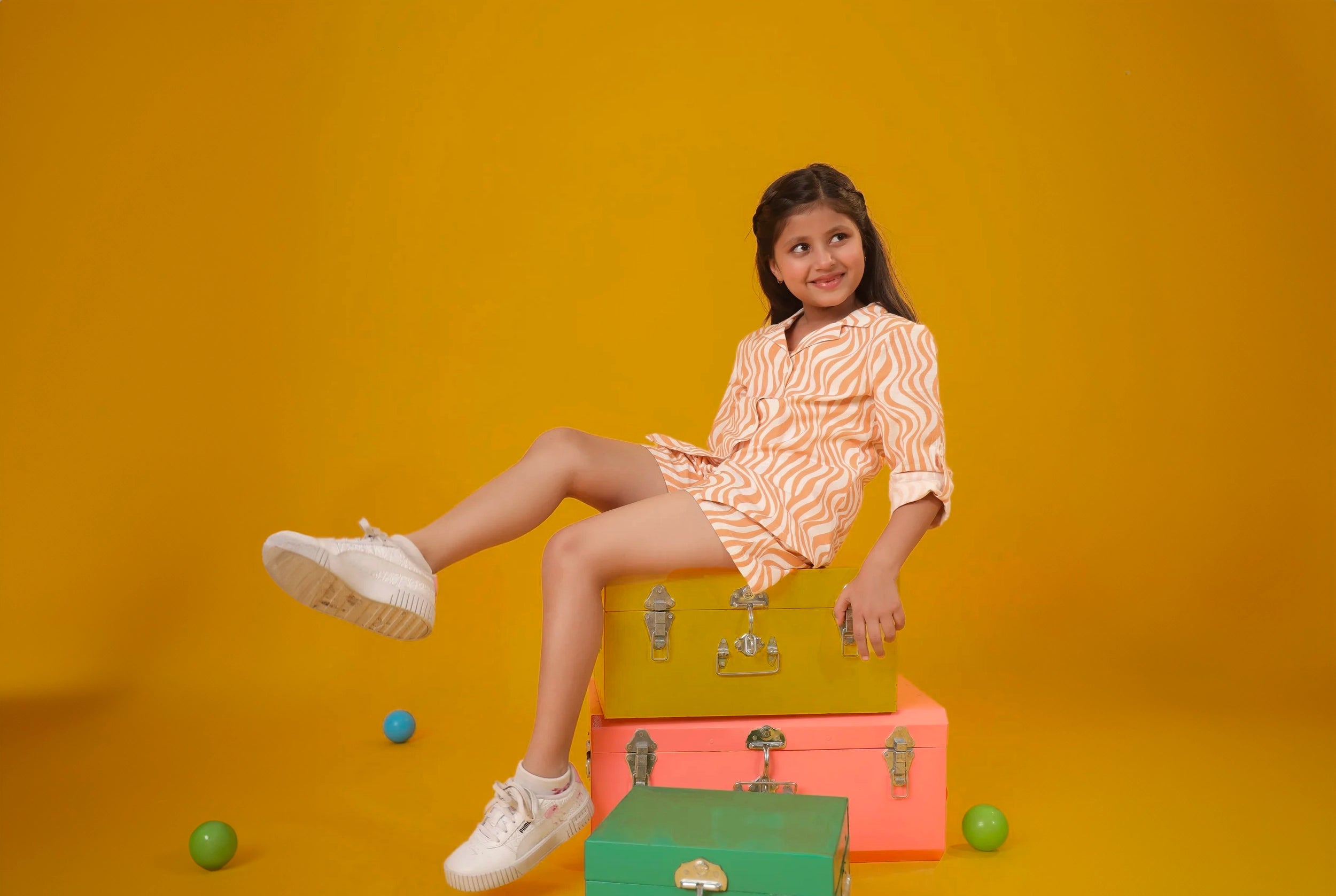
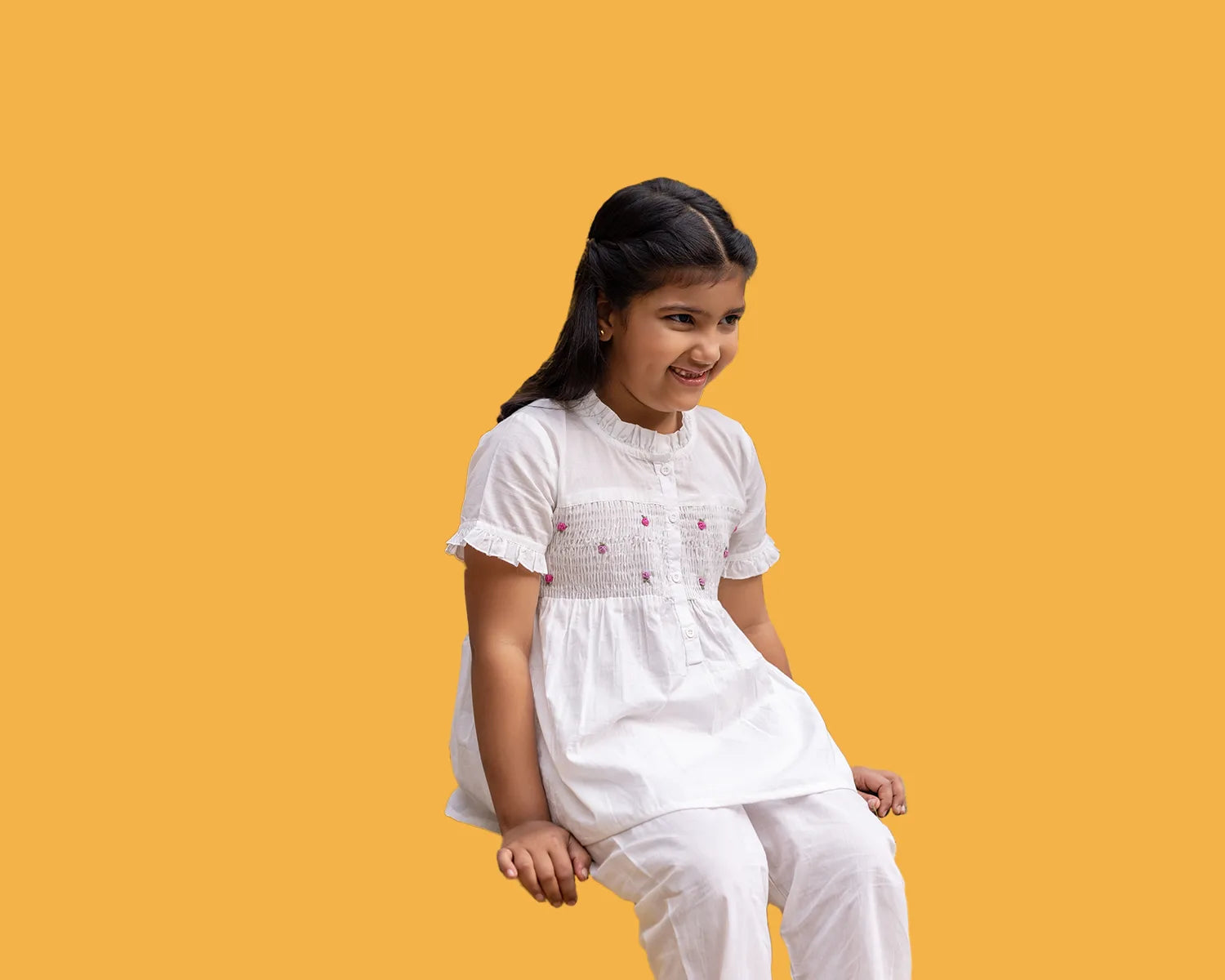
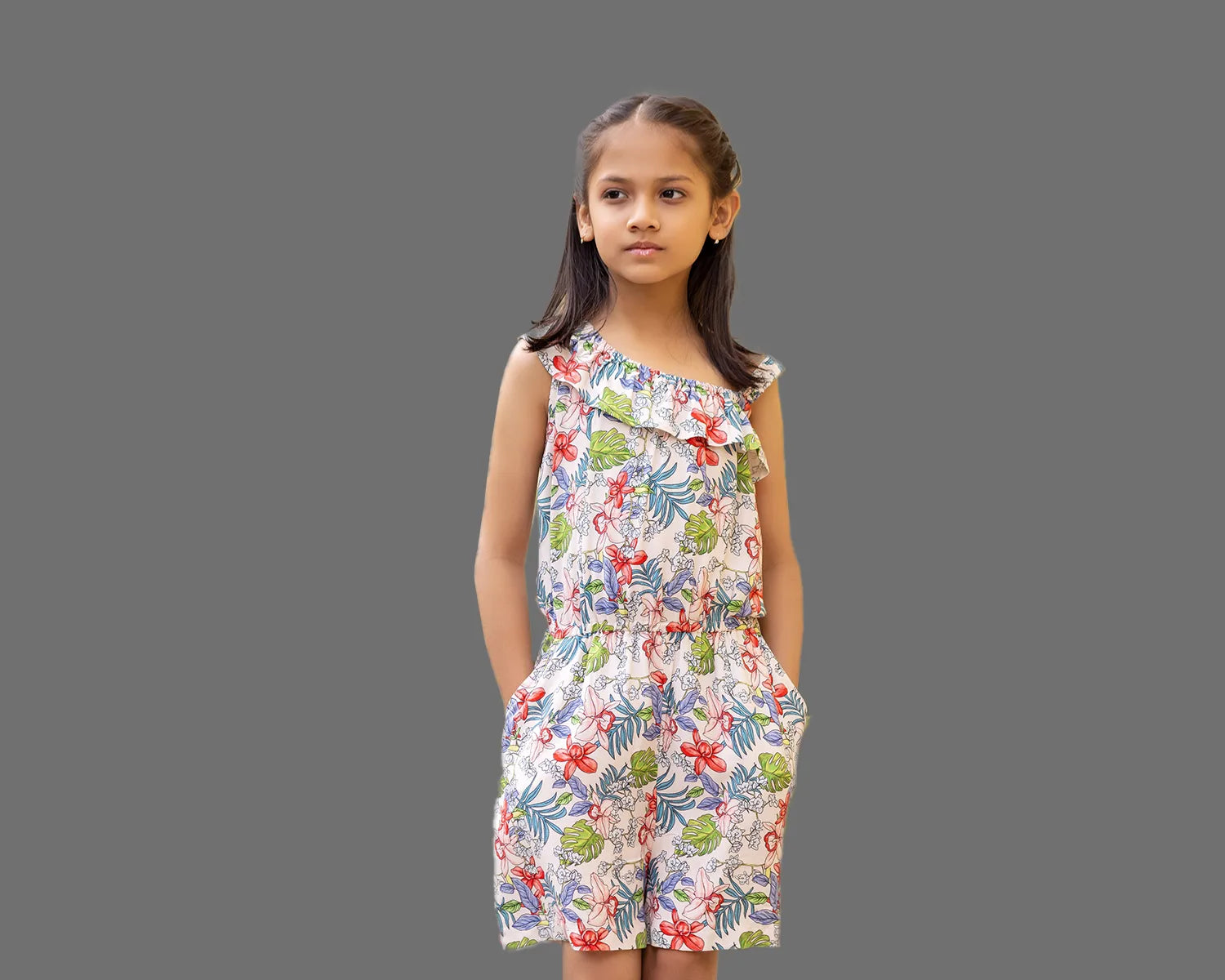
For celebrations where the dress code allows them, browse our dresses for girls, cotton shirts for boys and co-ord sets for girls. Check each product's fabric and size information before choosing.
For Garba and Dandiya
Before selecting Garba outfits for kids, ask whether the organiser expects a particular traditional costume. A performance may call for a chaniya choli, kediyu or another specified outfit.
Try the complete outfit during a short practice. Check that hems clear the floor, sleeves allow movement and any dupatta stays secure. Choose footwear the child has already worn comfortably. Our Navratri dress guide for kids covers traditional and simpler festive options.
For home puja and family visits
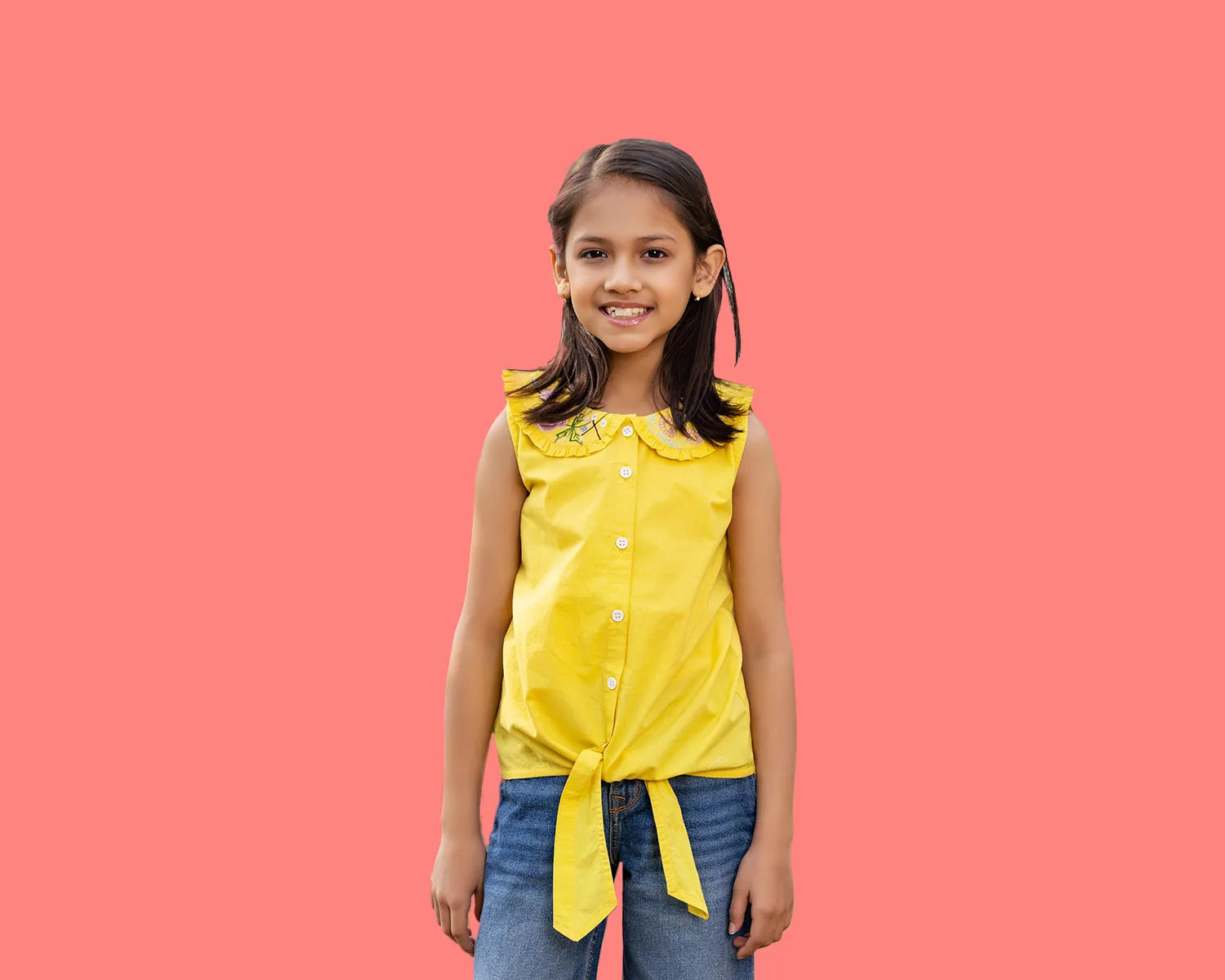
If you are looking for cotton dresses for girls, our Red Embroidery Detail Dress offers a red option with collar embroidery. The White Blue Embroidered Floral Cotton Shirt for Boys can pair with suitable trousers from your child's wardrobe.
Choose pieces that fit the occasion and have a use after Navratri. When buying kids' clothes online, follow the individual size chart and compare measurements as directed. Allow time for a try-on before the event.
Choose an activity your child wants to repeat
A paper rangoli can stay on the table for another afternoon. A rhythm game can continue while you put the craft materials away. Leave room for those small extensions instead of trying to finish all 15 ideas.
Plan the clothes once you know what the child will do. At The Little Trunk, you can explore dresses, shirts and co-ord sets for school events and family visits, then choose a piece that works with the clothes your child already enjoys wearing.
Frequently asked questions
Which Navratri activities suit preschoolers and kindergarten children?
Paper rangoli with large shapes, a colour hunt, clapping games and simple counting are useful Navratri activities for kindergarten and preschool groups. Prepare the pieces in advance, give one instruction at a time and help children who need it. Shorten the activity when their interest changes.
What are some easy Navratri craft ideas for kids?
Paper torans, diya greeting cards, paper rangoli and decorated paper dandiya props need only a few materials. Choose one craft, prepare any cutting beforehand and let children decide on colours and patterns. Most of these activities can fit into a 15 to 20-minute session.
How can we celebrate Navratri with kids at home on a small budget?
Use scrap paper, crayons, existing toys and clothes already in the wardrobe. Try a clapping game, ask a relative for a festival memory or make a small display together. Choose one activity at a time so you can reuse materials across several days.
How do you organise Navratri games for kids in a small classroom?
Choose seated games such as clap-and-repeat, colour spotting or picture sequencing. Keep bags and craft materials out of the movement area. If the room cannot fit a loose dance circle comfortably, use seated clapping and take turns leading the rhythm.
What should children wear for a school Navratri celebration?
Follow the school's dress code and consider the timetable. Comfortable festive dresses, shirts and co-ord sets can suit events that allow them. A traditional performance may need a specific costume. Check fit, fastenings, garment length and footwear before the school day.
Do children need a new outfit for every Navratri colour day?
No. Start by checking clothes that fit now, including separates and prints with the required colour. Ask the school whether a colour accent is acceptable. If you need to buy something, choose a piece that pairs with existing clothes and suits other occasions.

